|
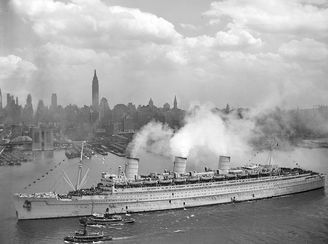 Queen Mary 1945 coming to port in NYC | 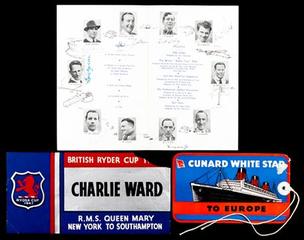 Signed 1947 Ryder Cup Dinner Banquet Card British Team |
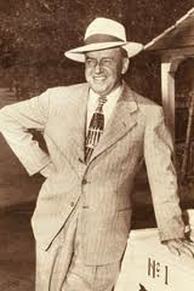
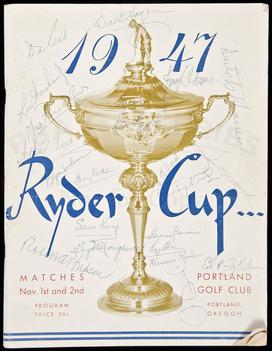
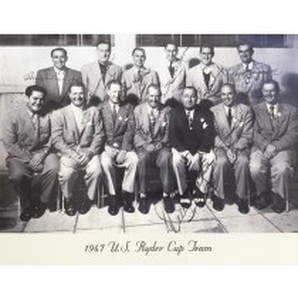
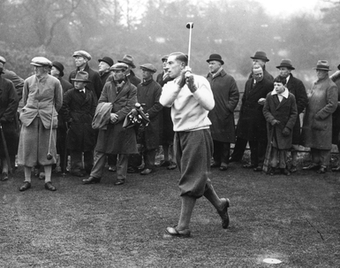
With Hudson firmly added to the PGA's board of influence he offered Portland Golf Club as the host for the return of the Ryder Cup. There was absolutely no money available from the PGA in UK with all the war relief still underway. So Hudson decided to pay the fare for the entire UK team to travel to America on the Queen Mary, where he met them in NYC and travelled by Train over four days to Portland Oregon. According to Ryder Cup history, Britain's Max Faulkner -- who had requested the specific train route in advance -- surprised his teammates by citing American history along the route.
Author's note: Imagine that train ride. Oh golly - I can just taste the single-malt scotch with putting contests in the train carpeted aisles into highball glasses. Surely followed by all night games of poker and bridge and British tales of American history.
The American side fielded one of its strongest teams ever, with the Big 3 - Ben Hogan, Byron Nelson, Sam Snead - joined by, among others, future Hall of Famers Jimmy Demaret and Lloyd Mangrum.
I can just about guarantee many of the Eastmoreland Wolves purchased tickets to watch a few matches and get some ideas on how to play the shots. Thanks to Robert Hudson the best in the world were battling it out once again on Portland Golf Club.
I can just about guarantee many of the Eastmoreland Wolves purchased tickets to watch a few matches and get some ideas on how to play the shots. Thanks to Robert Hudson the best in the world were battling it out once again on Portland Golf Club.
"A year ago we were riding high. Now we are all but sunk." Eastmoreland Origin Story - Part 3
9/28/2016
"A year ago we were riding high. Now we are all but sunk." 1922
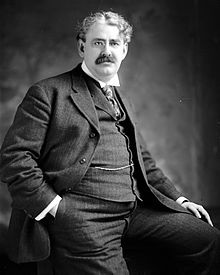 Frederick W. Mulkey, Tax Supervisor who ruled golf must be self-sustaining. '“I grew up in Portland when there were no supervised playgrounds; and look at me.” This remark was quoted by a newshawk who added the rejoinder, “Yes; look at him!”
 In 1921, the entire 18 holes of Eastmoreland golf course was essentially complete. There would be still much earth projects to make the course playable, irrigation and drainage would have to be built. We're in Oregon after all, and one constant is rain, rain, and more rain. So we can only imagine how waterlogged the fairways might have been in 1921 and then subsequently baked out in the summer. (Sidenote: extensive research and articles will help tell the story of the maintenance crew which over the years has polished and cut this gem to its current state which, under the direction of Superintendent Kathy Hauff, at certain times of the year the greens will rival even the most manicured private clubs.)
Overall as Keyser states later that by 1921 "we were riding high." The reasons are quite plain, the Eastmoreland golf course greens fees were turning out consistent revenue, the course was packed, the layout across crystal springs served as a bellwether for modern golf in the western states. This entire project conceived and started less than 5 years earlier could be called nothing but a marvel and great success.
Further, the Committee formulated a 'gentleman's agreement' to ensure that the municipal golf links would remain in public hands by working out a deal with Paul Murphy, then President of the Ladd Estate Company - for the City to acquire full deed to the land occupied by the back 9 - and some adjacent property for the third green - which was placed on the far side of the Johnson Creek. (Sidenote: Johnson Creek was later rerouted though this occurred many years later in the 1950's or 1960's as will be determined) The economics of the deal, as will be shown later, prove to be a fair deal at or under the market - in the spirit of what truly was a gentleman's agreement. It's not that Mr. Murphy was purely charitable - he was afterall developing the entire Eastmoreland neighborhood at the time and marketing the fact that one could "work downtown and live along the golf course in Eastmoreland." Though it's equally fair to say Paul Murphy was a true friend to golf and visionary for community building - as he later built out the town of Lake Oswego and the Oswego Lake Country Club using the same golf course architect W. Chandler Egan.
It's at this point our villain arrives on the scene, in the form of a Tax Supervising & Conservation Committee. Yes our dear brothers in the Eastmoreland Golf Club were set against by an early ancestor of the tax cutting "club for growth" led by F. W. Mulkey. Mulkey a early member of the Young Republicans having graduated from University of Oregon in 1896 with a degree in law and political aspirations that led to him serving as President of the City Council for a year and completed two terms as Unites States Senator from 1907-1918. Though it should be noted his two brief terms as U.S. Senator lasted less than a total of 9 months combined- both times as a replacement for sitting Senators who had to step down and serving a replacement before appointing his would-be-successor. At this point Mulkey is fresh off his last stint as pinch-Senator, making way for another candidate to go through the pain of actually running for office, and is elected chair of this newly created Tax Committee.
Now Keyser actual pays a fair amount of respect and admiration to Mulkey for his "yoeman service" (efficient, loyal service), though you wonder if there is more than a hint of irony. Further, as I suggested at the start, the ruling itself is the catapulting event - in the screenplay world we might call it 'hero's call to action.' The City ruling 'golf must be entirely self-sustaining" sets in motion a mission and chain of events and decisions that is arguably the hallmark of its greatness as a municipal service. That said, at the time of the ruling, the details of the financials reveal that truly "all hope is lost." Because despite growing greens fees revenues, the income could not hope to meet minimum maintenance requirements and the obligations of the gentleman's agreement. On top of that, the stipulation that the Municipal Golf Revenue must pay back $10,000 to the City treasury first added an immediate undue burden. So you have to wonder if Mulkey's ruling was intended by design as a death blow to municipal golf and an opening for privateers seeking to purchase the distressed property (as will be evidenced in coming part 4). Keyser's own opinion may be discerned by his labeling of the 'ukase ruling': From the Russian term meaning "decree" by a Tzar, the word ukase has entered the English language with the meaning of "any proclamation or decree; an order or regulation of a final or arbitrary nature."
In fairness to Mulkay, it does appear that the leaders influencing the City and requisitioning budget allotments, which certainly included if not lead by Keyser himself, had perhaps blurred the lines, as he mentioned earlier that the back nine was completed by a 'subsidy of $40,000 discreetly appropriated time to time from city coffers.' So maybe Mulkey did have a point... though one must wonder if the golf course and the entire park system Keyser envisioned was an easy target.
Overall as Keyser states later that by 1921 "we were riding high." The reasons are quite plain, the Eastmoreland golf course greens fees were turning out consistent revenue, the course was packed, the layout across crystal springs served as a bellwether for modern golf in the western states. This entire project conceived and started less than 5 years earlier could be called nothing but a marvel and great success.
Further, the Committee formulated a 'gentleman's agreement' to ensure that the municipal golf links would remain in public hands by working out a deal with Paul Murphy, then President of the Ladd Estate Company - for the City to acquire full deed to the land occupied by the back 9 - and some adjacent property for the third green - which was placed on the far side of the Johnson Creek. (Sidenote: Johnson Creek was later rerouted though this occurred many years later in the 1950's or 1960's as will be determined) The economics of the deal, as will be shown later, prove to be a fair deal at or under the market - in the spirit of what truly was a gentleman's agreement. It's not that Mr. Murphy was purely charitable - he was afterall developing the entire Eastmoreland neighborhood at the time and marketing the fact that one could "work downtown and live along the golf course in Eastmoreland." Though it's equally fair to say Paul Murphy was a true friend to golf and visionary for community building - as he later built out the town of Lake Oswego and the Oswego Lake Country Club using the same golf course architect W. Chandler Egan.
It's at this point our villain arrives on the scene, in the form of a Tax Supervising & Conservation Committee. Yes our dear brothers in the Eastmoreland Golf Club were set against by an early ancestor of the tax cutting "club for growth" led by F. W. Mulkey. Mulkey a early member of the Young Republicans having graduated from University of Oregon in 1896 with a degree in law and political aspirations that led to him serving as President of the City Council for a year and completed two terms as Unites States Senator from 1907-1918. Though it should be noted his two brief terms as U.S. Senator lasted less than a total of 9 months combined- both times as a replacement for sitting Senators who had to step down and serving a replacement before appointing his would-be-successor. At this point Mulkey is fresh off his last stint as pinch-Senator, making way for another candidate to go through the pain of actually running for office, and is elected chair of this newly created Tax Committee.
Now Keyser actual pays a fair amount of respect and admiration to Mulkey for his "yoeman service" (efficient, loyal service), though you wonder if there is more than a hint of irony. Further, as I suggested at the start, the ruling itself is the catapulting event - in the screenplay world we might call it 'hero's call to action.' The City ruling 'golf must be entirely self-sustaining" sets in motion a mission and chain of events and decisions that is arguably the hallmark of its greatness as a municipal service. That said, at the time of the ruling, the details of the financials reveal that truly "all hope is lost." Because despite growing greens fees revenues, the income could not hope to meet minimum maintenance requirements and the obligations of the gentleman's agreement. On top of that, the stipulation that the Municipal Golf Revenue must pay back $10,000 to the City treasury first added an immediate undue burden. So you have to wonder if Mulkey's ruling was intended by design as a death blow to municipal golf and an opening for privateers seeking to purchase the distressed property (as will be evidenced in coming part 4). Keyser's own opinion may be discerned by his labeling of the 'ukase ruling': From the Russian term meaning "decree" by a Tzar, the word ukase has entered the English language with the meaning of "any proclamation or decree; an order or regulation of a final or arbitrary nature."
In fairness to Mulkay, it does appear that the leaders influencing the City and requisitioning budget allotments, which certainly included if not lead by Keyser himself, had perhaps blurred the lines, as he mentioned earlier that the back nine was completed by a 'subsidy of $40,000 discreetly appropriated time to time from city coffers.' So maybe Mulkey did have a point... though one must wonder if the golf course and the entire park system Keyser envisioned was an easy target.
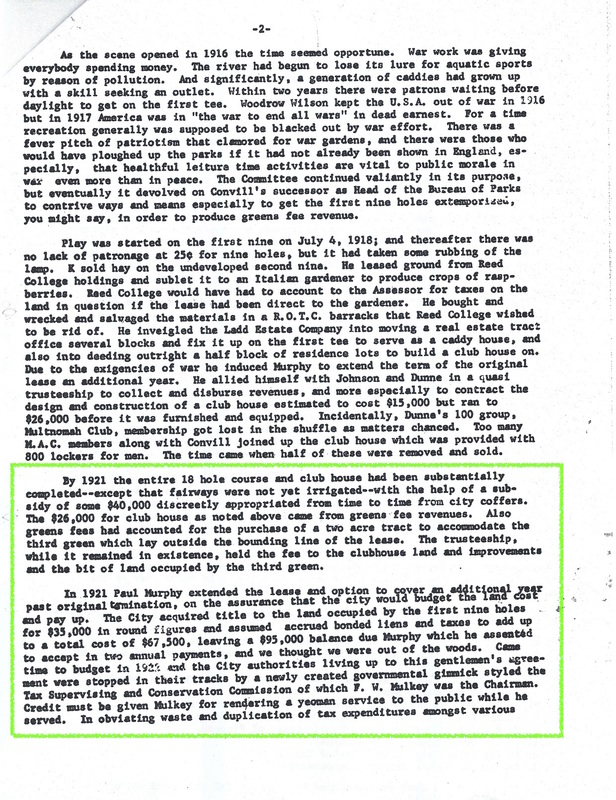 | 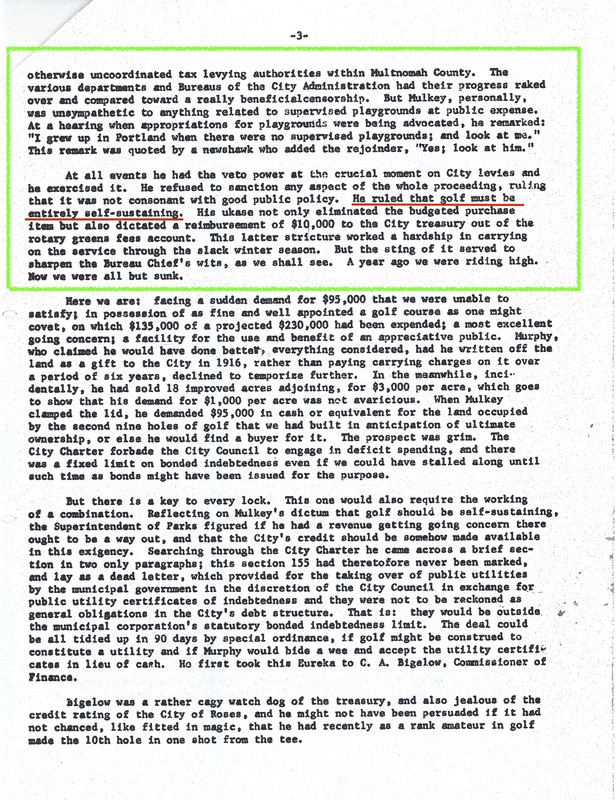 |
By 1921 the entire 18-hole course and Clubhouse have been substantially completed -- except that fairways or not yet irrigated -- with the help of a subsidy of some $40,000 discreetly appropriated from time to time from City coffers. The $26,000 clubhouse as noted above came from greens fee revenues also greens fees had accounted for the purchase of a two acre tract to accommodate the third green which lay outside the founding line of the lease. The trusteeship, while it remained in existence, held the fee to the clubhouse land and improvements and the bit of land occupied by the third green.
In 1921 Paul Murphy extended the lease an option to cover an additional year past original termination, on the assurance that the city would budget the land costs and pay up. The City acquired title to the land occupied by the first 9 holes for $35,000 in round figures and assumed accrued bonded liens and taxes to add up to a total cost of $65,500, leaving a $95,000 balance due Murphy which he assented to accept in two annual payments, and we thought we were out of the woods. Came time to budget in 1922 and the City authorities living up to this gentleman's agreement were stopped in their tracks by a newly-created governmental gimmick styled the Tax Supervising & Conservation Commission of which F. W. Mulkey was the Chairman. Credit must be given Mulkey for rendering a yeoman service to the public while he served. In obviating waste and duplication of tax expenditures among various otherwise uncoordinated tax levying the authorities within Multnomah County. The various departments and Bureaus of the City Administration had their progress raked over and compared toward a really beneficial censorship. But Mulkey, personally, was unsympathetic to anything related to supervised playgrounds at public expense. At a hearing when Appropriations for playgrounds were being advocated, he remarked: “I grew up in Portland when there were no supervised playgrounds; and look at me.” This remark was quoted by a newshawk who added the rejoinder, “Yes; look at him!”
At all events he had the veto power at the crucial moment on City levies and he exercised it. He refused to sanction any aspect of the whole proceeding, ruling that it was not consistent with good public policy. He ruled that golf must be entirely self-sustaining. His ukase not only eliminated the budgeted purchase item but also dictated a reimbursement of $10,000 to the City treasury out of the rotary greens fees account. This latter structure worked the hardship and carrying on the service though this through the slack winter season. But the sting of it serve to sharpen the Bureau Chiefs wits, as we will see a year ago we were riding high. Now we were all but sunk.
Frank Leuthold worked at the woolen mills of Oregon Worsted Company, located in Sellwood, less than a half mile down the road from Eastmoreland. The mill was built in 1909, by one of the Bishops brothers who owned Pendleton Wool. It was booming during WWI and then again throughout WWII. Frank worked there since he was a young man in the 1920's until they finally closed the mill in 1976. Frank's job was to make sure the looms kept running and everyday he would ply his fingers into the mechanisms and gears to adjust the metals that would produce some of the finest woolen fabrics in Oregon. Each evening after work, these same hands and fingers would be put to use towards his passion - gripping the club with a gentle firmness that Sam Snead once described as “like holding a baby bird in your hand” - and letting the arms swing to send that dimpled ball 1.68 inches large towards a hole just 4.5 inches small some 168 yards away. On this particular day March 6, 2000 Frank must have donned his rain jacket and a well brimmed hat to stave off the cold light drizzle (0.08 inches) that started at 37* and peaked at a blustery 48*.
For all but the truly dedicated golfer, this was not a day to take on the elements on the Eastmoreland golf course. For Frank this was just another Wednesday and at 88 years old - he no longer had to ply his hands in the looms - so everyday was a good day for golf.
For all but the truly dedicated golfer, this was not a day to take on the elements on the Eastmoreland golf course. For Frank this was just another Wednesday and at 88 years old - he no longer had to ply his hands in the looms - so everyday was a good day for golf.
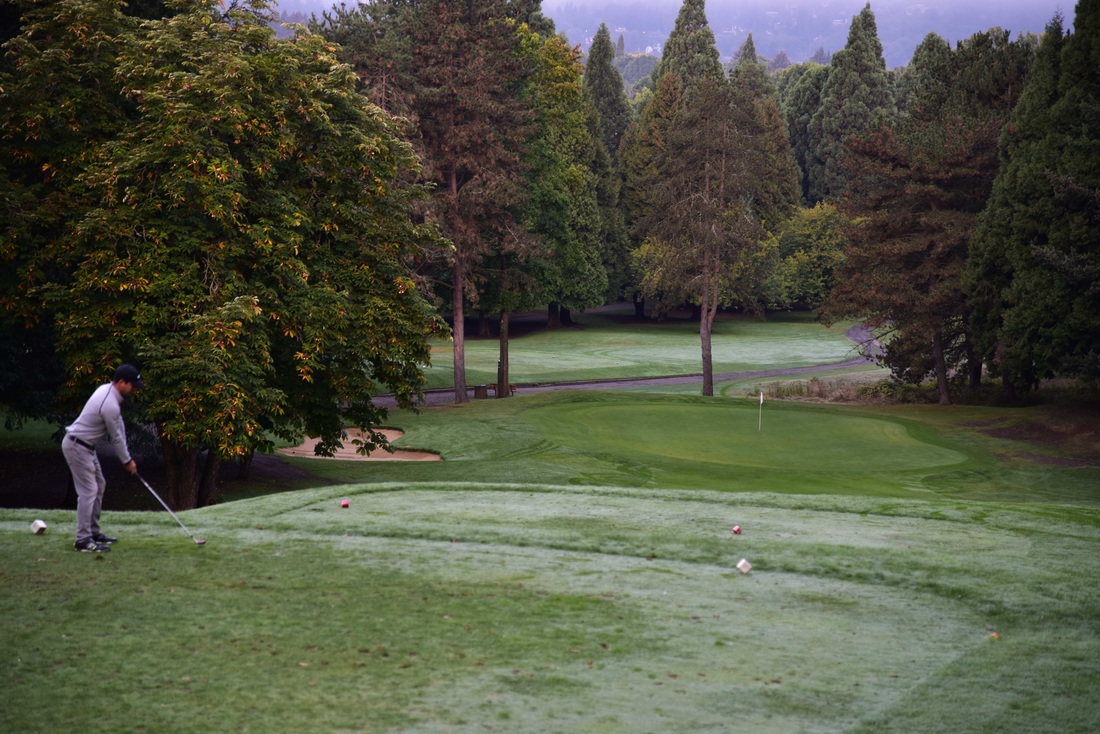
the author recreating the shot on #5 with Frank's PowerBuilt 7 wood
Ever since he started at the wool factory in the 1920's until its closure in 1976 (see History of the Mill Store), Frank became a fixture at Eastmoreland - the wool factory located just a few thousand yards from the tee box of the 5th hole - nestled up on the hill close to where the original #4 green once stood some 70 years earlier. It was always the course for the community so a guy like Frank could feel at home looping the links on a daily basis. For years he would show up at dawn to squeeze in 9 or after work to squeeze in as many as possible until the sun went down. His wife was known as one of the classic golf widows - yet on many an occasion - she would join him on the course - or play along with the Ladies club. Frank was a fixture of the Men’s club during the days of the the “Wolves Game” though it’s just as likely he knew enough to stay at arms length.
 | 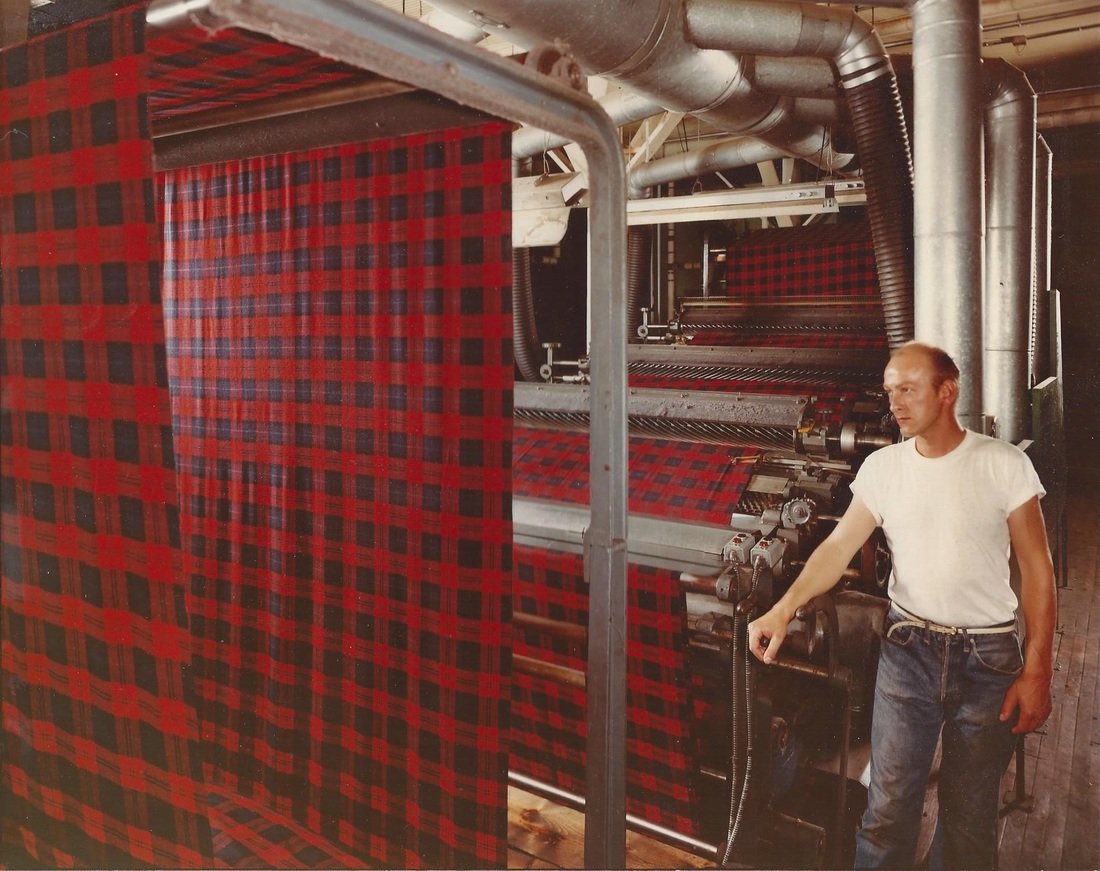 Is that possibly Frank? we can only guess |
Frank was well known on the course, born in 1912 the year his family moved from Switzerland to the United States. Frank’s older brother Joe was actually more famous in his lifetime - a mountaineer and skier who lived up to his Swiss roots and pioneered many of the early ascents on Mt. Hood in the 1930’s. He later taught rock climbing to the newly minted 10th mountaineering division at Fort Lewis and would go on to fight the axis powers in the winter slopes of Italy and come home a hero. Joe passed away 35 earlier in 1965 as one of the most heralded climbers and founders of the Mt Hood Ski Patrol - and just might trekked up the hill to the #5 tee with Frank in the past, or at least on this day in spirit.
Playing in Eastmoreland all these years Frank amassed an impressive collection of golf balls. Like many of the grizzled veterans that battled the “great ball hawk monster” as coined by the past Men’s club president, Eastmoreland was a treasure trove of free golf balls for those that understand where to look. His collection was estimated over 10,000 golf balls with over 3 blue barrels filled with balls from decades of scrounging.
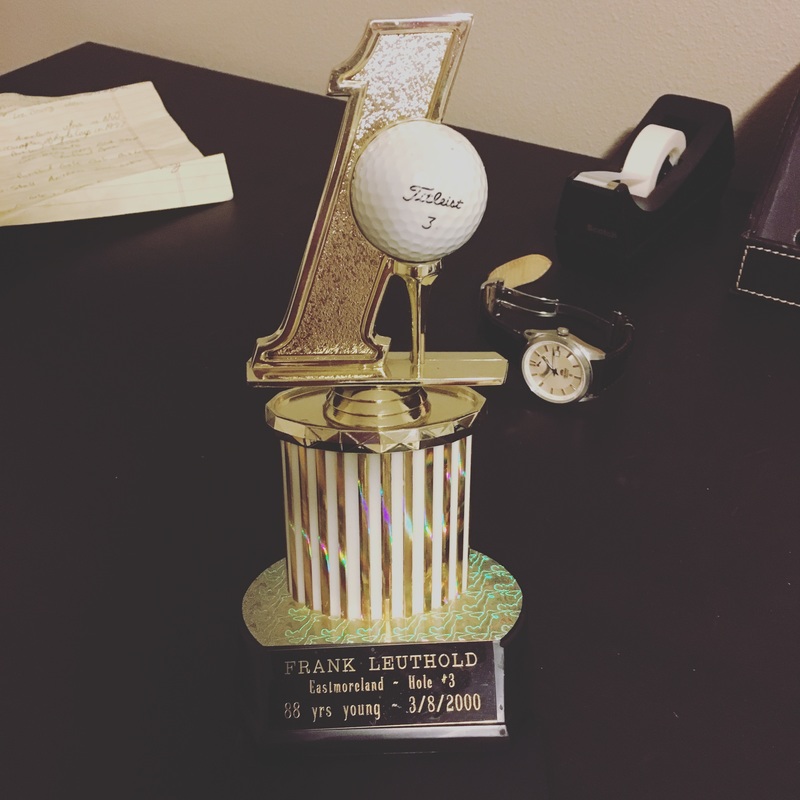
On this day he pulled out a black Titleist DT 100 number 3, the predecessor to today’s ProV1 “a solid center wound technology for golfers seeking a combination of long tee to green distance, wound ball spin, responsive feel and cut-proof durability”. The Pro version of the DT 100 had a balata cover Given the year he played this ball - there’s a pretty good chance this ball was purchased new in the pro-shop, though as I look it over carefully it has the wear of at least four holes and maybe more. There’s at least one scuff mark reminiscent of a bounce off a cart path (perhaps an overly safe drive on #2 or approach pulled left on #3) plus a few marks that reveal the wear or a well struck wedge. Given his penchant for finding balls it’s just as likely he found this ball during his last round by weekend warrior who proceeded to purchase and lose a brand new sleeve before even finishing hole #13.
Frank usually played in the mornings, though I’m not certain what time he climbed the hill from the #4 green, or how many over par he was. At 88 years old if he were playing bogey golf - he very well might be on his way to shooting his age. A feat he’s alleged to have done more than a few times in the past years. What would happen next would only bolster that opportunity.
He ascended the hill to the 5th tee, perched on the highest point of the entire course. At the top he pulled out a seven wood - a club not found in many bags - though a one I’ve wielded on occasion especially before the advent of the spoon-like hybrids that came to the market post 2001. Most likely, he did not have to think too hard about the club choice - the 5th hole provides from two tee boxes carved into the hill like a stepped garden with the whites playing between 165-180 and the blues from 200-215. The pin location from front to back adds the greatest variance a large square shaped green with rounded corners that is 30 yards top to bottom and 20 yards side to side. Everything slopes to the front with a slight tilt to the front left. The slope is the greatest at the top most portion of the green and the bottom with another false front. The flagstick was most likely cut somewhere back center perhaps slightly more to the left side as the distance recorded on this day was 175 from the whites. Though the elevation of at least 150 feet means the hole plays at least 10-15 yards less - however the wind will be a factor as the ball will apex far above the treeline - and weather reports a brisk 10-15 mph wind blowing east from left to right across the hole.
Playing in Eastmoreland all these years Frank amassed an impressive collection of golf balls. Like many of the grizzled veterans that battled the “great ball hawk monster” as coined by the past Men’s club president, Eastmoreland was a treasure trove of free golf balls for those that understand where to look. His collection was estimated over 10,000 golf balls with over 3 blue barrels filled with balls from decades of scrounging.
On this day he pulled out a black Titleist DT 100 number 3, the predecessor to today’s ProV1 “a solid center wound technology for golfers seeking a combination of long tee to green distance, wound ball spin, responsive feel and cut-proof durability”. The Pro version of the DT 100 had a balata cover Given the year he played this ball - there’s a pretty good chance this ball was purchased new in the pro-shop, though as I look it over carefully it has the wear of at least four holes and maybe more. There’s at least one scuff mark reminiscent of a bounce off a cart path (perhaps an overly safe drive on #2 or approach pulled left on #3) plus a few marks that reveal the wear or a well struck wedge. Given his penchant for finding balls it’s just as likely he found this ball during his last round by weekend warrior who proceeded to purchase and lose a brand new sleeve before even finishing hole #13.
Frank usually played in the mornings, though I’m not certain what time he climbed the hill from the #4 green, or how many over par he was. At 88 years old if he were playing bogey golf - he very well might be on his way to shooting his age. A feat he’s alleged to have done more than a few times in the past years. What would happen next would only bolster that opportunity.
He ascended the hill to the 5th tee, perched on the highest point of the entire course. At the top he pulled out a seven wood - a club not found in many bags - though a one I’ve wielded on occasion especially before the advent of the spoon-like hybrids that came to the market post 2001. Most likely, he did not have to think too hard about the club choice - the 5th hole provides from two tee boxes carved into the hill like a stepped garden with the whites playing between 165-180 and the blues from 200-215. The pin location from front to back adds the greatest variance a large square shaped green with rounded corners that is 30 yards top to bottom and 20 yards side to side. Everything slopes to the front with a slight tilt to the front left. The slope is the greatest at the top most portion of the green and the bottom with another false front. The flagstick was most likely cut somewhere back center perhaps slightly more to the left side as the distance recorded on this day was 175 from the whites. Though the elevation of at least 150 feet means the hole plays at least 10-15 yards less - however the wind will be a factor as the ball will apex far above the treeline - and weather reports a brisk 10-15 mph wind blowing east from left to right across the hole.
At 88 years old, it’s a triumph to swing the club, by choosing a seven wood for a 175 shot showed he still could crack the whip.
At 88 years old, it’s a triumph to swing the club, so choosing a seven wood for a 175 shot showed he still could crack the whip. Most players know the one club that will get them to the center of the green - assuming it’s well struck. It’s likely that Frank did not take too much time over the ball after he teed it up less than an inch - perhaps using one of the many broken tees strewn in the ground. One practice swing and go - and while it’s impossible to know whether his shot was a line drive that landed well in front of the green or perhaps took an errant right turn and into the tall firs and took a lucky kick back to the left - we do know that the result makes these possibilities highly unlikely. For on this March day the ground around the 5th green is soft and clingy and typically the only shots that find the green are ones that fly straight and true into the sky, hanging in the air for just a minute as the golfer and the player partners pray - be long enough - c’mon wind - or let it be right as the ball begins the descent straight down to the earth and towards the pin. In Frank’s case, on this day, the ball was as right as it could possibly be coming to rest in the hole - perhaps on a slam dunk - one-hopper - or a ricochet off the pin straight down into the hole - or as I like to think two bounce roller that ever so gently trickled right into the center of the hole… so Frank could watch in anticipation for the white spec to disappear. But who know’s if he even knew - after all the uncertainty that comes from eyes looking for 88 years and playing with fellas who most likely half blind and deaf. It was a miracle they could still convince their wives to let them drive to the course everyday, let alone see a golf ball find it’s home 175 yards away on an overcast March day.
So let me shout out now, from the 5th tee and highest point on the entire course even with some of the tallest treetops of Eastmoreland - “IT’S IN THE HOLE!!”
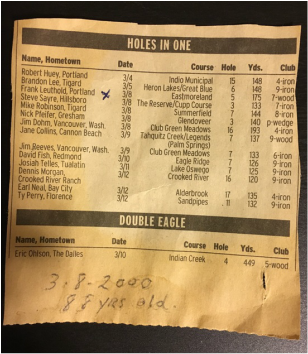
The Oregonian published his hole in one the following week along with 15 other players - most other them were short shots 148 yards or less - still a magnificent feat… though if I may, none as special as the 175 yard seven wood on the 5th by Frank Leuthold, who at 88 years young is the oldest player to record a hole in one in the history of Eastmoreland.
So let me shout out now, from the 5th tee and highest point on the entire course even with some of the tallest treetops of Eastmoreland - “IT’S IN THE HOLE!!”
The Oregonian published his hole in one the following week along with 15 other players - most other them were short shots 148 yards or less - still a magnificent feat… though if I may, none as special as the 175 yard seven wood on the 5th by Frank Leuthold, who at 88 years young is the oldest player to record a hole in one in the history of Eastmoreland.
 |  |
And if I have to wait that long for mine - well, all the sweeter it will be. Here's to you, Frank.
Special thanks to Howard Boyte for sharing the story and loaning Frank's clubs and trophy to Eastmoreland 100 Project.
Special thanks to Howard Boyte for sharing the story and loaning Frank's clubs and trophy to Eastmoreland 100 Project.
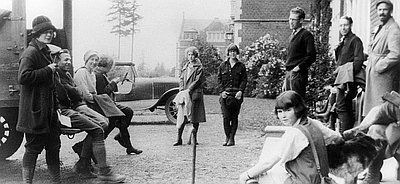
Reedies, 1920 Courtesy Special Collections, Eric V. Hauser Memorial Library, Reed College
Reed college is a bit of an enigma wrapped in tudor-styled bungalow with walnut built-ins circa 1926. Though I've lived here nearly 15 years, I've not once ventured onto the campus - of course countless times I've walked alongside as I traverse 28th ave from the 13th green to the 14th tee box on the other side of the Crystal Springs Rhododendron gardens. (Side note: I believe this brief walk is one of the only places you can drink open container legally in Portland - more on this "looper hole" tidbit in a future article.)
Reed's early history is connected to Emo by more than just a road. As discussed in Part 2 of Charles Keyser's telling of the tale, the land adjacent to Reed that would eventually become the epic back 9, with Chandler Egan's genius layout criss crossing of the Crystal Springs, and argued at the time as the toughest hazard-filled layout in all of the west coast. The legendary raspberry farm by an Italian gardener - who will hopefully be identified by name soon.
Look at these Reedies from 1926 photo above - what a bunch of hipsters even back then! The woman on the left is in trousers of all things!. The tall guy far to the right with the goatee and mustache - and... still donning his beige bathrobe?! While these educational pioneers did appreciate understated 'trying - not trying' fashion - they had a clear distaste for organized sports - a distraction from the pure academic pursuits and finding the perfect pair of walking boots. Even today with 1400 students Reed has no varsity sports teams. So we are left wondering if any students looped a few rounds at Eastmoreland. My bet is 100% yes - there was a golfer among them - perhaps even in this photograph.
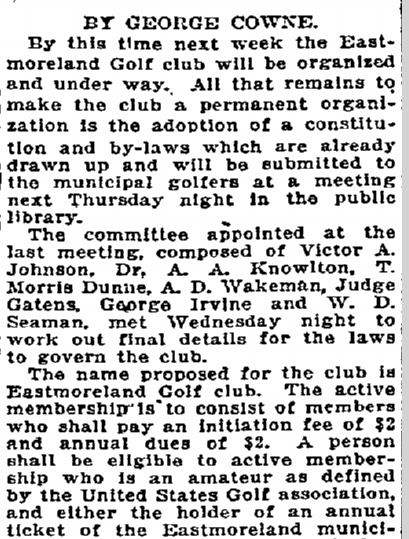
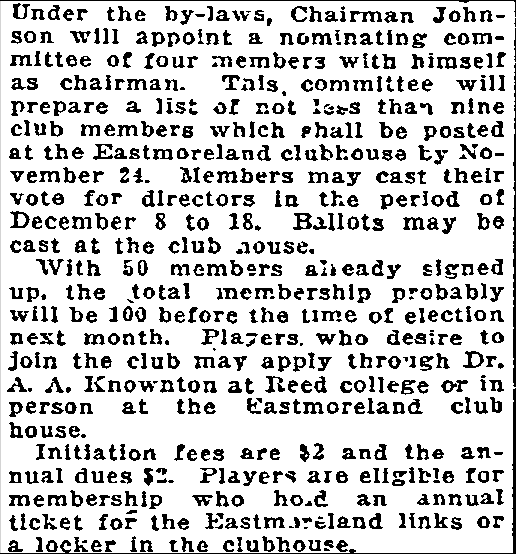
What is certain is there was at least one golfer from Reed College - a gentleman Dr. A. A. Knowlton - who along with T. Morris Dunne, A.D Wakeman, Judge Gatens, George Irvine and W.D. Seaman met to form the By-Laws of the Eastmoreland Golf Club as reported in the Oregonian on November 11, 2021. Just one week later, with the by-laws in place the chairman scheduled a vote for the initial club board of which we can assume Dr. A. A. Knowlton was a shoe-in candidate. Why? Well he's the contact listed for any players that with to join the club for the $2 membership fee though only eligible to those that have annual ticket and/or a locker in the newly constructed clubhouse
Reed's early history is connected to Emo by more than just a road. As discussed in Part 2 of Charles Keyser's telling of the tale, the land adjacent to Reed that would eventually become the epic back 9, with Chandler Egan's genius layout criss crossing of the Crystal Springs, and argued at the time as the toughest hazard-filled layout in all of the west coast. The legendary raspberry farm by an Italian gardener - who will hopefully be identified by name soon.
Look at these Reedies from 1926 photo above - what a bunch of hipsters even back then! The woman on the left is in trousers of all things!. The tall guy far to the right with the goatee and mustache - and... still donning his beige bathrobe?! While these educational pioneers did appreciate understated 'trying - not trying' fashion - they had a clear distaste for organized sports - a distraction from the pure academic pursuits and finding the perfect pair of walking boots. Even today with 1400 students Reed has no varsity sports teams. So we are left wondering if any students looped a few rounds at Eastmoreland. My bet is 100% yes - there was a golfer among them - perhaps even in this photograph.
What is certain is there was at least one golfer from Reed College - a gentleman Dr. A. A. Knowlton - who along with T. Morris Dunne, A.D Wakeman, Judge Gatens, George Irvine and W.D. Seaman met to form the By-Laws of the Eastmoreland Golf Club as reported in the Oregonian on November 11, 2021. Just one week later, with the by-laws in place the chairman scheduled a vote for the initial club board of which we can assume Dr. A. A. Knowlton was a shoe-in candidate. Why? Well he's the contact listed for any players that with to join the club for the $2 membership fee though only eligible to those that have annual ticket and/or a locker in the newly constructed clubhouse
 |  |
With some additional research I hope to discover more about my fellow Men's Club organizer Dr. A. A. Knowlton. One interesting chapter in his life was when he was tasked by the U.S. Army to help train new recruits to be meteorologists for the war effort. One can guess that it was Dr. Knowlton himself who recommended some daily excursions to the golf course to study the weather and remark "I don't think the heavy stuff's gonna come down for quite awhile."
I do hope to get more photos Dr. Knowlton in knickers and with his sticks - perhaps learn about his favorite playing partners, his handicap, or when he gave up tennis at Waverly to focus on his true life's calling... golf.
Oh and Dr. Knwolton's course of study - why physics of course! One can only surmise how many students had exam questions to calculate the exact velocity and trajectory of a well placed shot into the 17th green with a 15 mph head wind.
I do hope to get more photos Dr. Knowlton in knickers and with his sticks - perhaps learn about his favorite playing partners, his handicap, or when he gave up tennis at Waverly to focus on his true life's calling... golf.
Oh and Dr. Knwolton's course of study - why physics of course! One can only surmise how many students had exam questions to calculate the exact velocity and trajectory of a well placed shot into the 17th green with a 15 mph head wind.
 |  |
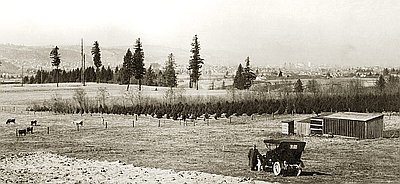 Crystal Springs Farm c.1908 Courtesy Special Collections, Eric V. Hauser Memorial Library, Reed College
 "As the scene opens in 1916 the time seemed opportune." - Charles Keyser, Head of Parks & Recreation 1916-1955
With the scene set and all the players accounted for in our last post, Keyser provides the backdrop of the initial building of the Eastmoreland. Pollution of the river depressed the public's appetite for aquatic sports, so Keyser sees municipal golf as an alternative recreation. With the golf boom is just underway and by 1914 municipal golf courses are in vogue with Jefferson Park in Seattle and Lincoln Park in San Francisco, so the Portland is in a race to catch up. The U.S. is not yet officially entered WWI though demand for war supplies in Europe means the economy is bustling and 'everyone has spending money.'
It's fairly clear that Keyser is an true administrator, his focus in the background on the economics and logistics of building the municipal golf links. Keyser, for his part, doesn't focus on the political mechanisms - largely because the Committee, led by then Head of Parks Bureau James Convill and his compatriot T. Morris Dunne both leaders from the M.A.C. club. There was quite a bit more politicking both among the city commissioners as well as promotion of the municipal golf links to the public through the local newspapers. Over the course of the summer of 1916, the Committee co-ordinated efforts of public relations and city council to get the official approval in the fall, along with Dunne's 100 group - those who purchased advanced "club membership" to raise the initial capital. What exactly happened for the Dunne 100 to 'get lost in the shuffle' remains unclear, though hopefully more clues can be found in the history of the private clubs, of which many of these group were either a part of - or would go on to found their own clubs. What requires further research is whether there ever was some intent of the Committee to provide for some exclusive play of the M.A.C. club, however the record indicates it was always intended for municipal purposes and public play.
Reed College makes the first appearance in the story - having itself been founded on 8 years prior in 1908 - and the old dorm block first opening in 1912. Reed College runs adjacent to Emo's back 9 and separated by 28th Avenue. The college and the golf course do share the beautiful bounty of the Crystal Springs and it's Rhododendron garden. They also shared some early structures as Keyser went about recycling an old R.O.T.C. building and repurposing down the road as a caddyshack. (Portland's Rebuilding Center would give kudos I'm sure!) And for those early years in 1917-1920, the back nine construction was financed in part by income from the Raspberry farms - though I wonder if perhaps some of the luscious blackberry's that line almost every tee box on the back might be remnants of the original berry batch.
The repeated concessions by the Ladd Estate Company also begin in earnest, as the 5 year 'free lease' was set to expire in 1921. Get ready for some twists and turns because the ownership and payment for the land will soon become the crux of the issue and put the entire golf links at jeopardy.
With the scene set and all the players accounted for in our last post, Keyser provides the backdrop of the initial building of the Eastmoreland. Pollution of the river depressed the public's appetite for aquatic sports, so Keyser sees municipal golf as an alternative recreation. With the golf boom is just underway and by 1914 municipal golf courses are in vogue with Jefferson Park in Seattle and Lincoln Park in San Francisco, so the Portland is in a race to catch up. The U.S. is not yet officially entered WWI though demand for war supplies in Europe means the economy is bustling and 'everyone has spending money.'
It's fairly clear that Keyser is an true administrator, his focus in the background on the economics and logistics of building the municipal golf links. Keyser, for his part, doesn't focus on the political mechanisms - largely because the Committee, led by then Head of Parks Bureau James Convill and his compatriot T. Morris Dunne both leaders from the M.A.C. club. There was quite a bit more politicking both among the city commissioners as well as promotion of the municipal golf links to the public through the local newspapers. Over the course of the summer of 1916, the Committee co-ordinated efforts of public relations and city council to get the official approval in the fall, along with Dunne's 100 group - those who purchased advanced "club membership" to raise the initial capital. What exactly happened for the Dunne 100 to 'get lost in the shuffle' remains unclear, though hopefully more clues can be found in the history of the private clubs, of which many of these group were either a part of - or would go on to found their own clubs. What requires further research is whether there ever was some intent of the Committee to provide for some exclusive play of the M.A.C. club, however the record indicates it was always intended for municipal purposes and public play.
Reed College makes the first appearance in the story - having itself been founded on 8 years prior in 1908 - and the old dorm block first opening in 1912. Reed College runs adjacent to Emo's back 9 and separated by 28th Avenue. The college and the golf course do share the beautiful bounty of the Crystal Springs and it's Rhododendron garden. They also shared some early structures as Keyser went about recycling an old R.O.T.C. building and repurposing down the road as a caddyshack. (Portland's Rebuilding Center would give kudos I'm sure!) And for those early years in 1917-1920, the back nine construction was financed in part by income from the Raspberry farms - though I wonder if perhaps some of the luscious blackberry's that line almost every tee box on the back might be remnants of the original berry batch.
The repeated concessions by the Ladd Estate Company also begin in earnest, as the 5 year 'free lease' was set to expire in 1921. Get ready for some twists and turns because the ownership and payment for the land will soon become the crux of the issue and put the entire golf links at jeopardy.
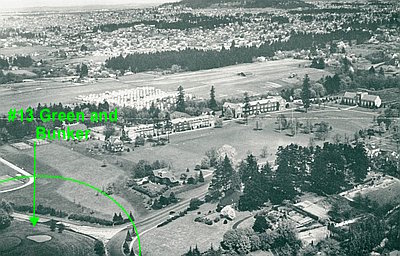
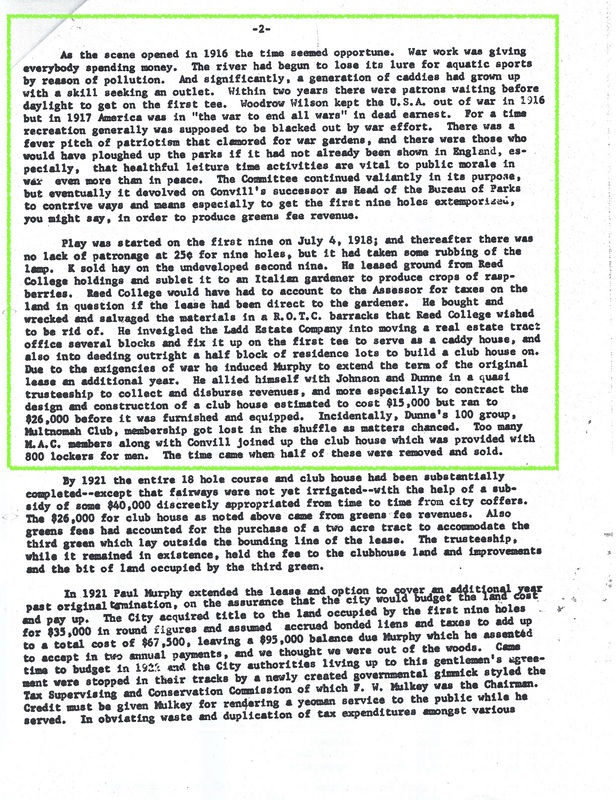
As the scene opens in 1916 the time seemed opportune. War work was giving everybody spending money. The river had begun to lose its lure for aquatic sports by reason of pollution. And significantly, a generation of caddies had grown up with a skill seeking an outlet. Within two years there were patrons waiting before daylight to get to the first tee. Woodrow Wilson kept the U.S.A. out of war in 1916 but in 1917 America was in “the war to end all wars” in dead earnest. For a time recreation generally was supposed to be a blacked-out by war effort. There was a fever pitch of patriotism that clamored for war gardens, and there were those who would have plowed up the parks if it is not already been shown in England, especially, that healthful leisure time activities are vital to public morale in war even more than in peace. The Committee continued valiantly in its purpose, but eventually it devolved on Conville successor as Head of the Bureau of Parks to contrive ways and means especially to get the first 9 holes extemporized, you might say, in order to produce greens fee revenue.
Play was started on the first 9 on July 4th 1918; and thereafter there was no lack of patronage at 25¢ for 9 holes, but it was taken some rubbing of the lamp. Keyser sold hay on the underdeveloped second 9. He leased ground from Reed College Holdings and sublet it to an Italian gardener to produce crops of raspberries. Reed College would have had to account to the Assessor for taxes on the land in question if the lease had been directed to the gardener. He (Keyser) bought and wrecked and salvaged the materials in an ROTC Barracks that Reed College wished to be rid of. He inveigled the Ladd estate company into moving a real estate tract office several blocks and fix it up on the first tee to serve as a caddy house, and also into deeding out right a half-block of residence lots to build a clubhouse on. Due to the exigencies sees of War he induced Murphy to extend the term of the original lease an additional year. He Allied himself with Johnson and done in a quasi trusteeship to collect and disburse revenues, and more especially to contract the design and construction of a clubhouse estimated to cost $15,000 but ran to $26,000 before it was furnished and equipped. Incidentally, Dunne’s 100 group, Multnomah club, membership got lost in the shuffle as matters chance. Too many M.A.C. members along with Convill joined up the clubhouse which was provided with 800 lockers for men. The time came when half of these were removed and sold.
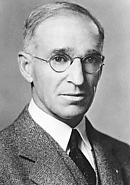 Charles Paul Keyser - circa. 1935
 There is something unique about municipal golf in Portland that many people may not know - it is, by mandate, required to be 100% self funded. This is a rather extraordinary requirement and unique among all other Bureau of Park properties and services. In spite of, or perhaps because of, this self-sufficient requirement, Portland's municipal golf links are some of the finest in the U.S and offer great public golf in close proximity to downtown.
How did this come to be? Who started it? How did it succeed without continuous public funding?
One particular document may prove to be the Rosetta Stone for uncorking the time capsule and understanding the real story behind the origins of Portland's municipal golf system. This clue was waiting to be rediscovered, almost like a map to the great treasure of history.
This author was Charles Paul Keyser, Portland Parks Superintendent from 1917 to 1950. Located in the City Archives is his description of the events as he looked back in 1958 - eight years after his retirement and eight years before he passed in 1966. Thankfully he took a moment to record and retell the 'scheme' and 'cast of characters' surrounding the birth of Eastmoreland for us to discover some 60 years later.
Keyser's vision for Portland parks system carries through to the present day and his dedication to the preservation of the land for the enjoyment of the people embodies the spirit of our fair city. Keyser began many projects including the rose test gardens, forest park, the community swimming pools - all which encourage productive recreation and ensured green space would remain a part of metropolitan Portland. Keyser had the foresight to see that municipal golf links would enhance outdoor leisure-time activities for all the people of Portland, not just a select few of the privileged class.
The document is a total of 5 pages. To build suspense, in the spirit of cool 1920's noir film that may have inspired Keyser himself during his original authorship, I will be posting each page separately. A faithful copy of the text follows the image.
How did this come to be? Who started it? How did it succeed without continuous public funding?
One particular document may prove to be the Rosetta Stone for uncorking the time capsule and understanding the real story behind the origins of Portland's municipal golf system. This clue was waiting to be rediscovered, almost like a map to the great treasure of history.
This author was Charles Paul Keyser, Portland Parks Superintendent from 1917 to 1950. Located in the City Archives is his description of the events as he looked back in 1958 - eight years after his retirement and eight years before he passed in 1966. Thankfully he took a moment to record and retell the 'scheme' and 'cast of characters' surrounding the birth of Eastmoreland for us to discover some 60 years later.
Keyser's vision for Portland parks system carries through to the present day and his dedication to the preservation of the land for the enjoyment of the people embodies the spirit of our fair city. Keyser began many projects including the rose test gardens, forest park, the community swimming pools - all which encourage productive recreation and ensured green space would remain a part of metropolitan Portland. Keyser had the foresight to see that municipal golf links would enhance outdoor leisure-time activities for all the people of Portland, not just a select few of the privileged class.
The document is a total of 5 pages. To build suspense, in the spirit of cool 1920's noir film that may have inspired Keyser himself during his original authorship, I will be posting each page separately. A faithful copy of the text follows the image.
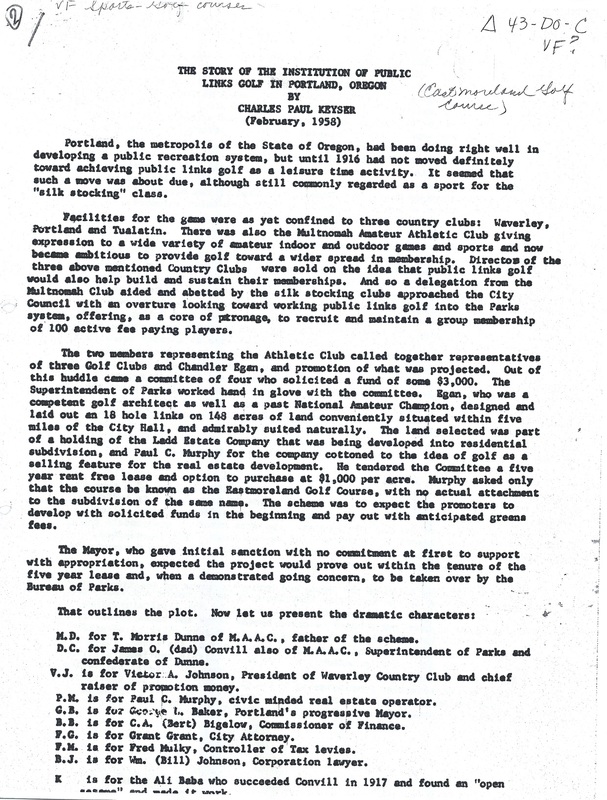
Portland, the Metropolis of the State of Oregon, had been doing right well in developing a public recreation system, but until 1916 had not moved definitively toward achieving public links golf as a leisure-time activity it seemed that such a move was about due, although still commonly regarded as a sport for the “Silk Stocking” class.
Facilities for the game as yet confined to 3 country clubs: Waverly, Portland and Tualatin. There was also the Multnomah Amateur Athletic Club giving expression to a wide variety of amateur indoor and outdoor games and sports and now became ambitious to provide golf toward a wider spread in membership. Directors of the three above mentioned country clubs were sold on the idea that public Links Golf would also help build and sustain their memberships. And so a delegation from the Multnomah Club aided and abetted by the “Silk Stocking” clubs approached the city council with an overture looking toward working Public Links Golf into the parks system, offering, as a core patronage, to recruit and maintain a group membership of 100 active fee paying players.
The two members representing the Athletic Club called together representatives of the three Golf Clubs and Chandler Egan, and promotion of what was projected. Out of this huddle came a committee of 4 who solicited a fund of some $3,000. The Superintendent of Parks (James O. Corville) worked hand-in-glove with the committee. Egan who was a competent golf architect as well as a past National amateur Champion, designed and laid out an 18-hole link on a 148 acres of land conveniently situated within five miles of the city hall, and admirably suited naturally. The land selected was part of the holding of the Ladd estate company that was being developed into residential subdivision, and Paul C. Murphy for the company cotton to the idea of golf as a selling feature for the real estate development. He tendered the committee a five-year rent-free lease an option to purchase at $1,000 per acre. Murphy only asked that the course be known as the Eastmoreland Golf Course, with no actual attachment to the subdivision of the same name. This scheme was to expect the promoters to develop with solicited funds in the beginning and pay out with anticipated green fees.
The Mayor, who gave initial sanction with no commitment at first to support with appropriation, expected the project would prove out within the tenure of the five-year lease and, when a demonstrated going concern, to be taken over by the Bureau of parks.
That outlines the plot. Now let us present the dramatic characters:
M.D. for T. Morris Dunne of the M.A.A.C, father of the scheme
D.C. for James O. (dad) Convill also of M.A.A.C., Superintendent of Parks and confederate of Dunne
V.J. is for Victor A. Johnson President of the Waverly Country Club and chief raiser of the promotion money
P.M. is for Paul C. Murphy, civic minded real estate operator
G.B. is for George L. Baker Portland’s progressive Mayor
B.B is for C.A. (Bert) Bigelow, COmmissioner of Finance
F.G. is for Grant Grant, City Attorney
F.M is for Fred Mulky, Controller of Tax levies
B.J. is for Wm. (Bill) Johnson, Corporation lawyer
K is for the Ali Baba who succeeded Convill in 1917 and found an “open sesame” and made it work ("Keyser" himself)
Facilities for the game as yet confined to 3 country clubs: Waverly, Portland and Tualatin. There was also the Multnomah Amateur Athletic Club giving expression to a wide variety of amateur indoor and outdoor games and sports and now became ambitious to provide golf toward a wider spread in membership. Directors of the three above mentioned country clubs were sold on the idea that public Links Golf would also help build and sustain their memberships. And so a delegation from the Multnomah Club aided and abetted by the “Silk Stocking” clubs approached the city council with an overture looking toward working Public Links Golf into the parks system, offering, as a core patronage, to recruit and maintain a group membership of 100 active fee paying players.
The two members representing the Athletic Club called together representatives of the three Golf Clubs and Chandler Egan, and promotion of what was projected. Out of this huddle came a committee of 4 who solicited a fund of some $3,000. The Superintendent of Parks (James O. Corville) worked hand-in-glove with the committee. Egan who was a competent golf architect as well as a past National amateur Champion, designed and laid out an 18-hole link on a 148 acres of land conveniently situated within five miles of the city hall, and admirably suited naturally. The land selected was part of the holding of the Ladd estate company that was being developed into residential subdivision, and Paul C. Murphy for the company cotton to the idea of golf as a selling feature for the real estate development. He tendered the committee a five-year rent-free lease an option to purchase at $1,000 per acre. Murphy only asked that the course be known as the Eastmoreland Golf Course, with no actual attachment to the subdivision of the same name. This scheme was to expect the promoters to develop with solicited funds in the beginning and pay out with anticipated green fees.
The Mayor, who gave initial sanction with no commitment at first to support with appropriation, expected the project would prove out within the tenure of the five-year lease and, when a demonstrated going concern, to be taken over by the Bureau of parks.
That outlines the plot. Now let us present the dramatic characters:
M.D. for T. Morris Dunne of the M.A.A.C, father of the scheme
D.C. for James O. (dad) Convill also of M.A.A.C., Superintendent of Parks and confederate of Dunne
V.J. is for Victor A. Johnson President of the Waverly Country Club and chief raiser of the promotion money
P.M. is for Paul C. Murphy, civic minded real estate operator
G.B. is for George L. Baker Portland’s progressive Mayor
B.B is for C.A. (Bert) Bigelow, COmmissioner of Finance
F.G. is for Grant Grant, City Attorney
F.M is for Fred Mulky, Controller of Tax levies
B.J. is for Wm. (Bill) Johnson, Corporation lawyer
K is for the Ali Baba who succeeded Convill in 1917 and found an “open sesame” and made it work ("Keyser" himself)
After most rounds you'll find me in the 19th Hole enjoying a cider or whiskey and reminiscing on the best shots and lamenting the bad breaks, bad decisions and just poor play.
Each day I would marvel at the 1918 plates that framed the entryway from the 19th hole back to the bar - along with the cool shots of the original players "The Wolves" with their 1947 team trophy, the gaggle of crowds following one of the earliest City Championship finals or Frank Dolp and his dapper attire among the Model T's.
Many private clubs will have books celebrating the long storied history of their origins, the development and redesign of the land, memorable turning points for the club, and the celebrate the varied characters that golfed through the decades. Each of these clubs share a singular thread, the love of the game, the fascination with the struggle to make par from the beginning of time to today. Without any doubt at all, I can imagine the power to time travel might reveal how much changes have occurred. Though I can also surmise that when one pipes the ball and splits the center of the fairway, or hits a beautiful chip just inches from the hole - the magic and mystery and awe that comes from a well played game of golf.
With the encouragement and support of Club President Vinny DiGiano a modern torch bearer of the "Wolves" game (famous scratch players from the 1950's that would play anyone who was willing to bet) - along with Jack Schneider, Byron Patton, Jason Wood, Ray Comella, and Randy Grosz.
So I've set my effort to documenting the storied history of how this amazing jewel of a golf course came into being. I'm delighted to discover that Eastmoreland story is tied to the entire the community as the game was originally intended.
-Billy McGee
Each day I would marvel at the 1918 plates that framed the entryway from the 19th hole back to the bar - along with the cool shots of the original players "The Wolves" with their 1947 team trophy, the gaggle of crowds following one of the earliest City Championship finals or Frank Dolp and his dapper attire among the Model T's.
Many private clubs will have books celebrating the long storied history of their origins, the development and redesign of the land, memorable turning points for the club, and the celebrate the varied characters that golfed through the decades. Each of these clubs share a singular thread, the love of the game, the fascination with the struggle to make par from the beginning of time to today. Without any doubt at all, I can imagine the power to time travel might reveal how much changes have occurred. Though I can also surmise that when one pipes the ball and splits the center of the fairway, or hits a beautiful chip just inches from the hole - the magic and mystery and awe that comes from a well played game of golf.
With the encouragement and support of Club President Vinny DiGiano a modern torch bearer of the "Wolves" game (famous scratch players from the 1950's that would play anyone who was willing to bet) - along with Jack Schneider, Byron Patton, Jason Wood, Ray Comella, and Randy Grosz.
So I've set my effort to documenting the storied history of how this amazing jewel of a golf course came into being. I'm delighted to discover that Eastmoreland story is tied to the entire the community as the game was originally intended.
-Billy McGee
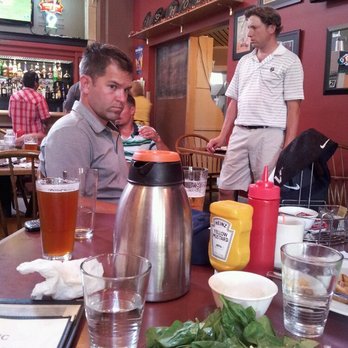
Past men's club champion Chad Sawyer and men's club president Vinny Digiano
 RSS Feed